Network Time Protocol (NTP) is a protocol that helps a network of computers synchronize their time in a network. It is an application protocol that runs on user data protocol on port 123 that is responsible for the synchronization of hosts on a TCP/IP network. NTP is required in a communication mechanism to ensure seamless connection.
Network time protocol servers have access to precise atomic clocks and GPU clocks and it uses coordinated universal time to synchronize the CPU clock time. This avoids even having a fraction of vulnerabilities in information exchange communication and provides consistent timekeeping for filer servers.
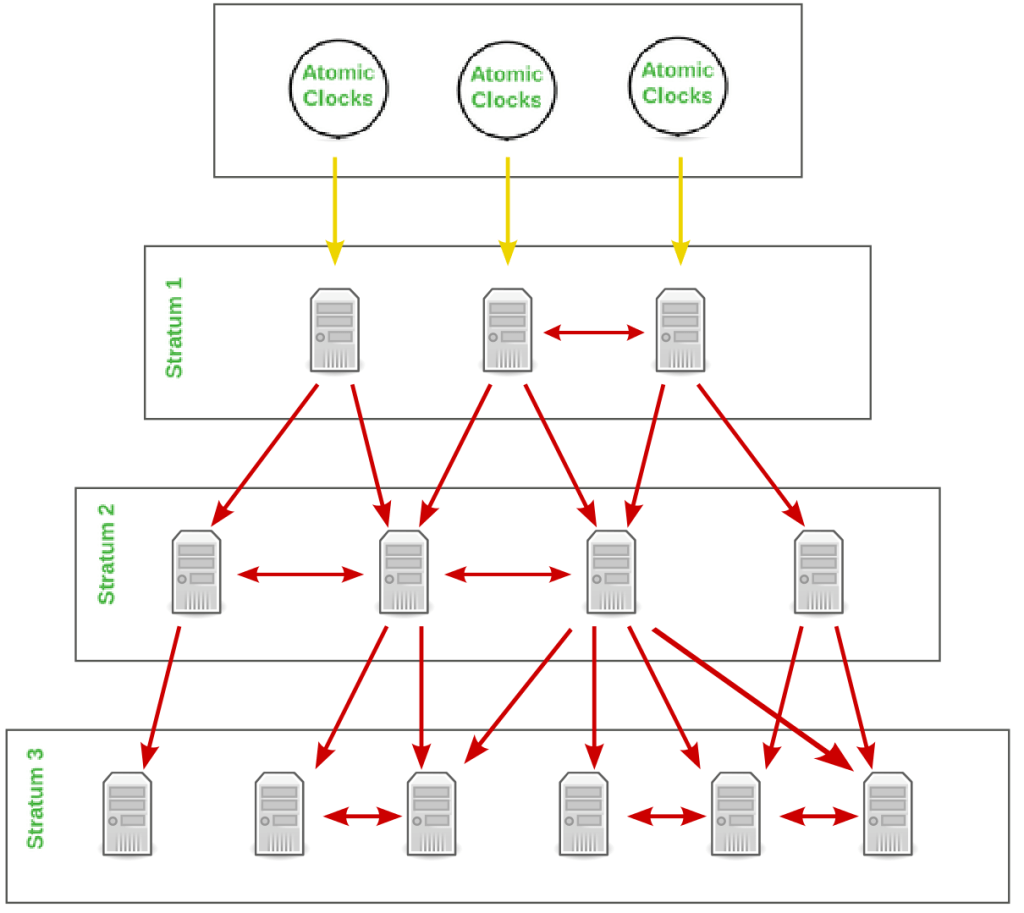
It uses a hierarchical system of time resources and provides synchronization within the stratum servers. The hierarchy starts at the top as stratum 1 and ends at the bottom as stratum 16. There is also stratum 0, which means a device is directly connected to the atomic or GPS clocks.
The stratum servers are linked from top down. These servers can talk horizontally as well to provide accurate date and time and can be synced to each other.
GPS time clock is a system that uses a constellation of 24 orbiting satellites and an atomic clock is a clock that measures time by monitoring the resonant frequency of atoms.
Network time protocol is critical for numerous applications from timekeeping for file servers to security mechanisms which depend on timestamp accuracy. It prevents fractions of errors or vulnerabilities in information exchange between clients via the server. It has adjustment techniques that resolve every time error no matter how slight it is, which prevents possible mistakes and vulnerabilities.
 HansITAcademy
You must be logged in to post a comment.