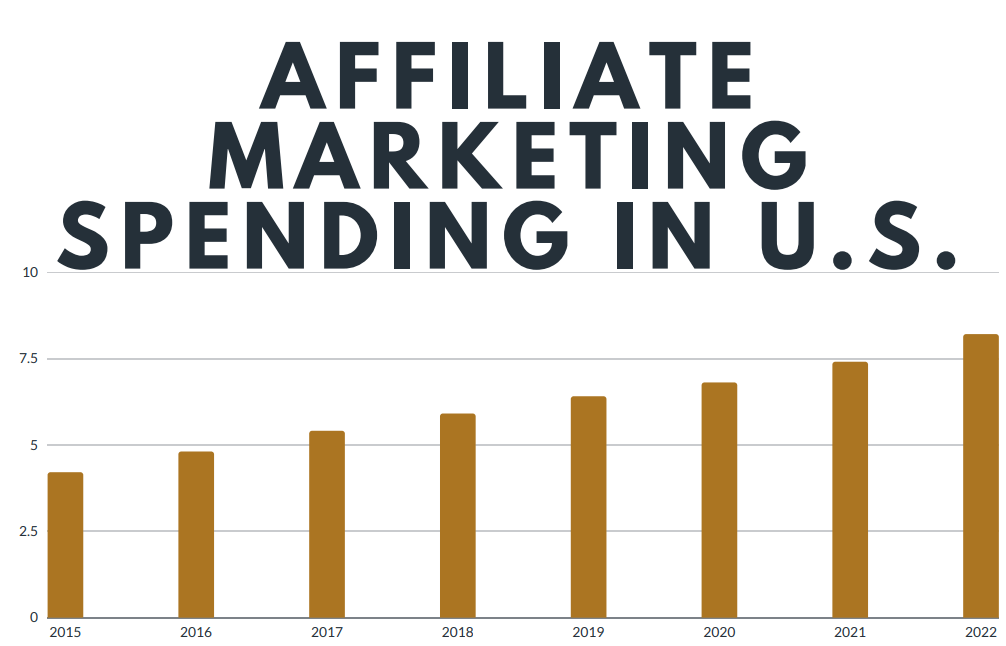
Being an affiliate marketer is more or less being a sales person. You earn a commission for marketing another person’s or company’s products and earns a piece of the pie. Average is 10%, but it fluctuates dependent on the type of product. Just in U.S. alone, companies spend billions as depicted in the chart below (the chart data was pulled from statista)
Companies can focus on delivering the end product while affiliates focus on promotion. Do note that consumers must be aware that the affiliates are receiving commission of the product. The Federal Trade Commission wants consumers to be aware of affiliate marketing in online advertising because affiliates are getting paid and may at time misconstrue information. FTC has a requirement for affiliates to have link disclosures and is now a considered best practice.
An affiliate disclosure, also known as an affiliate link disclosure or affiliate disclaimer, is a statement whether it exists on your website or your video content that informs users that you are compensated by a specific company or companies for promoting, reviewing, or recommending their products or services.
https://www.ftc.gov/business-guidance/resources/ftcs-endorsement-guides-what-people-are-asking
Per FTC website shown above, an FTC-compliant affiliate disclosure should “clearly and conspicuously” describe the nature of the relationship with the company to include the fact that you’re being compensated by them. Also, per FTC guidelines, affiliate disclosures should be displayed conspicuously and as close to your affiliate links or endorsed product mentions as possible. You need to place an affiliate disclosure on every page that includes a sponsorship, affiliate link, or endorsement.
There are multiple ways one can get paid with affiliate marketing. There is pay per sale, pay per lead, pay per click and pay per install. Pay per sale requires actual sales while pay per lead requires specific requirements the company has set like signing up for an account on their website. Pay per click is purely for creating traffic and pay per install is when a consumer installs a product on their app or software and pays for a subscription. Usually pay per install provides monthly payment if it’s subscription based.
 HansITAcademy
You must be logged in to post a comment.